
Why most NZ sawmills outgrow Excel for inventory management
Five signs your sawmill has outgrown spreadsheet-based inventory tracking, and what a purpose-built system actually needs to handle for NZ timber operations.
Read furtherWritten on
A practical guide to the timber species processed in New Zealand sawmills. Covers radiata pine, Douglas fir, macrocarpa, cypress, and eucalyptus from the operator's perspective - milling, drying, grading, treatment, and end markets.
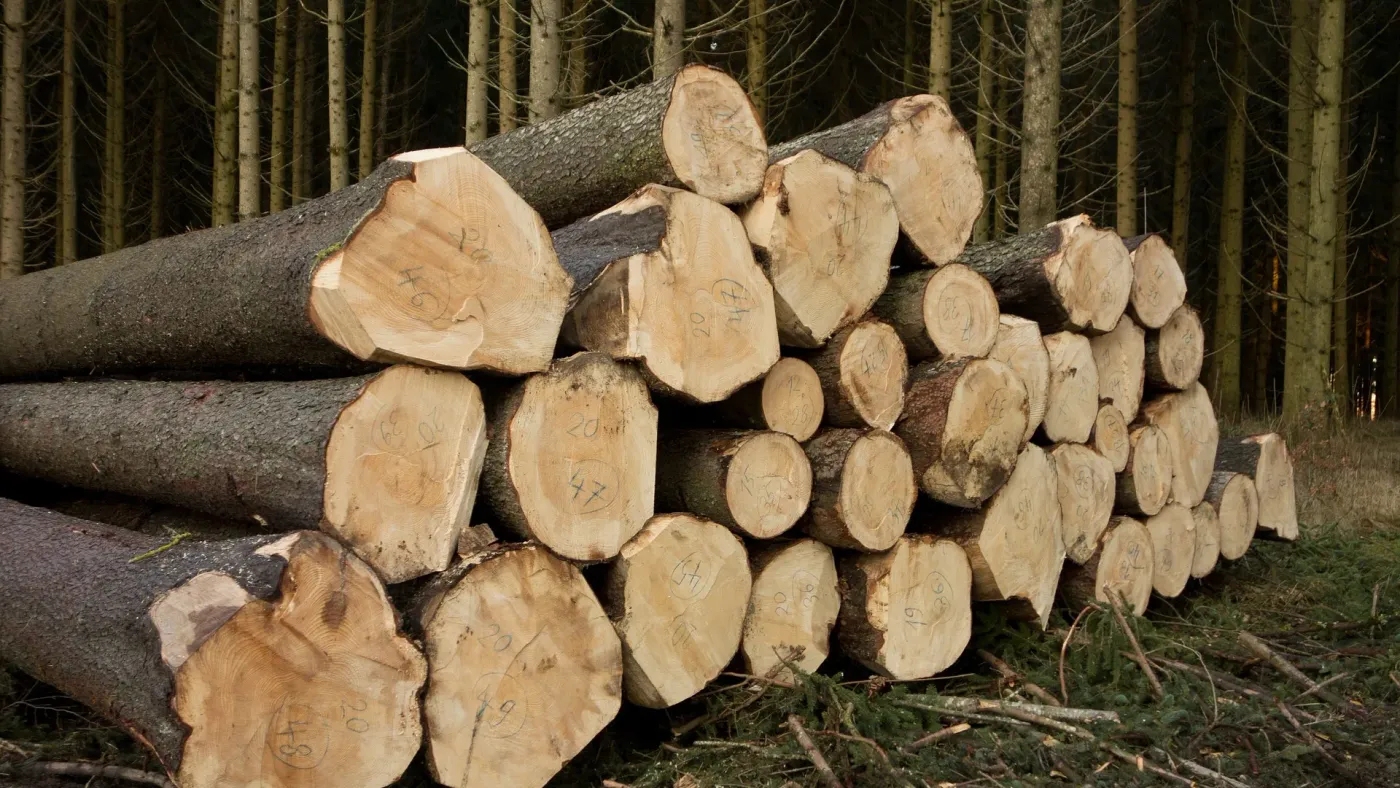
Most NZ timber species guides are written for architects choosing a cladding material or builders specifying framing for a consent application. That perspective skips the part that matters to sawmill operators: what each species actually means for your milling, drying, grading, treatment, and inventory operations.
This guide covers the species you’ll encounter on a NZ sawmill floor, from the radiata that fills 90%+ of your bins through to the specialty timbers that bring higher margins and different headaches.
Radiata dominates NZ forestry. It accounts for roughly 91% of planted forest area and 93.9% of the 33.6 million cubic metres harvested in the year ending March 2024 (MPI National Exotic Forest Description). If you run a sawmill in New Zealand, radiata is almost certainly your primary species.
Fast growth is the foundation. Radiata reaches harvest age at 25-35 years on a typical rotation, compared to 50-60 years for Douglas fir. That shorter rotation means a more predictable wood supply and lower capital tied up in standing timber. The wood is medium-density (around 500 kg/m3 air-dry), easy to saw, holds nails and screws well, takes paint and stain without difficulty, and machines cleanly when kiln dried.
The NZ radiata breeding programme has been running since the 1950s, producing successive generations of trees with straighter form, fewer branches, and more uniform wood properties. Modern plantation radiata bears little resemblance to the wild Monterey pine from California that it descends from.
Radiata saws easily with standard equipment. The main operational concern is corewood (the juvenile wood in the centre of the stem). Corewood in radiata has lower density, higher longitudinal shrinkage, and poorer dimensional stability than outerwood. In practical terms, this means boards cut from the corewood zone are more prone to warping, twisting, and bow during drying.
Pruned logs produce a knotty corewood core surrounded by clear outerwood. The clear grades command significantly higher prices for appearance applications (joinery, furniture, interior linings). Maximising clear-grade recovery from pruned logs is one of the key value optimisation challenges in radiata milling.
Unpruned logs produce knotty timber throughout. This timber is graded structurally (SG6/SG8/SG10) and used primarily for framing, fencing, and packaging.
Radiata responds well to both conventional and high-temperature kiln drying. Standard HT kiln schedules for 45mm framing run dry-bulb temperatures from 120C up to 140C with wet-bulb temperatures from 70C to 90C, completing a charge in 18-24 hours. Structural framing targets 18% moisture content at delivery. Joinery and dressing grades target 10-12%.
The main drying defect in radiata is kiln brown stain, a discolouration caused by chemical reactions in the wood at elevated temperatures. Brown stain is primarily cosmetic and doesn’t affect structural performance, but it downgrades appearance timber. Managing brown stain is a balancing act between drying speed (which customers and production schedules demand) and colour quality.
Green radiata is susceptible to sapstain if left too long between sawing and drying or treatment. In warm, humid conditions (much of the North Island in summer), sapstain can develop within days. This means scheduling between the saw and the kiln or treatment plant is time-sensitive.
Radiata sapwood accepts preservative treatment readily, which is why it’s the standard species for treated timber products in NZ. All hazard classes from H1.2 through H5 are available for radiata. See the treatment hazard class guide for the operational detail on each class.
Radiata heartwood has very low natural durability. Without treatment, it’s susceptible to decay and borer attack in any exposed situation. This is why H1.2 boron treatment became mandatory for radiata framing in 2011.
Structural framing (H1.2 treated, SG8/SG10) is the largest market by volume. Beyond framing: fencing and landscaping (H3.2/H4), decking (H3.2), packaging and pallets (untreated or H1.2), export logs (mostly to China, Korea, India, Japan), engineered wood products (LVL, glulam, CLT using structural veneers or laminations), and appearance/joinery (clear grades from pruned logs, kiln dried to 10-12% MC).
For radiata, your inventory needs to track at minimum: structural grade (SG6/8/10/12 or appearance grade), treatment class and preservative type, moisture state (green/KD/AD), dimensions, and dressing status. A pack of “90x45 SG8 H1.2 KD DAR” is a completely different product from “90x45 SG8 Untreated Green RS” even though the timber comes from the same tree. See the pack labelling guide for how these attributes should be encoded on the physical tag.
Douglas fir is the second most common plantation species in NZ, accounting for about 6% of planted forest area. Plantations are concentrated in the cooler southern regions: Otago, Southland, and Canterbury, with smaller areas in the central North Island. Douglas fir grows where radiata struggles, thriving in the cooler, higher-altitude sites of the Southern Alps foothills.
The timber has excellent structural properties. Douglas fir is stiffer and stronger than radiata of the same grade, with better dimensional stability and less corewood variation. It’s the preferred species for heavy structural applications, engineered timber, and any situation where the higher mechanical properties justify the price premium.
The heartwood has moderate natural durability, which means Douglas fir can be used untreated in some above-ground applications where radiata would require treatment. Under NZS 3602, Douglas fir heartwood is rated as “moderately durable” and can be specified for certain building applications without preservative treatment.
Douglas fir saws well but is denser than radiata, putting more load on saw blades. Blade maintenance intervals may need to be shorter. The wood has a distinctive reddish-brown heartwood colour and a paler sapwood band, which makes heartwood/sapwood segregation straightforward during grading.
One significant advantage: Douglas fir exhibits more uniform properties within the stem than radiata. The corewood problem that dominates radiata processing is much less pronounced in Douglas fir, producing more consistent timber across the log cross-section.
The 50-60 year rotation means Douglas fir logs tend to be larger diameter than radiata at harvest, which affects sawing patterns and recovery calculations.
Douglas fir dries more slowly than radiata and is more prone to checking (surface cracks) during kiln drying, particularly in thicker sections. Conventional kiln schedules are more common than HT for Douglas fir. Target moisture content for structural use is similar to radiata (18% for framing), but reaching that target takes longer.
Douglas fir heartwood resists preservative penetration. Unlike radiata, where CCA and other preservatives penetrate the sapwood easily, Douglas fir heartwood is refractory to treatment. This limits the treatment options for Douglas fir to sapwood-only penetration for some hazard classes.
For H1.2 boron treatment, Douglas fir accepts treatment adequately and the same mandatory H1.2 requirement applies as for radiata (since April 2011).
Heavy structural applications (beams, posts, poles), high-grade framing (valued for stiffness), appearance timber (the reddish-brown heartwood is attractive for exposed structural work, interior linings, and flooring), and export logs.
Douglas fir commands a price premium over radiata in structural grades, typically 15-30% depending on market conditions and grade.
Macrocarpa holds a special place in the NZ timber landscape. Originally planted as shelter belts on farms throughout the country, old macrocarpa trees are now a significant source of specialty timber. Some dedicated macrocarpa plantations were established in the 1970s and 1980s, though cypress canker disease has reduced enthusiasm for new plantings.
Natural durability. Macrocarpa heartwood is rated Durability Class 3 in-ground, which means a 50x50mm stake will last 10-15 years in the ground without any treatment. Above ground, it performs at a level equivalent to H3-treated pine. This natural durability means macrocarpa can be used for outdoor applications, garden furniture, decking, cladding, fencing, and landscaping without any chemical treatment at all.
For operators, this has a major inventory implication: macrocarpa is typically sold as “naturally durable” rather than being tracked through treatment classes. Your treatment-class field in the inventory system effectively reads “N/A - naturally durable” for macrocarpa heartwood.
Macrocarpa timber from old shelter belt trees is often large-dimension, with wide boards and long clear lengths. The wood has a distinctive fragrant, spicy smell (similar to pencil cedar) and a warm yellow-brown colour that darkens with age.
The sapwood band (40-50mm) has no natural durability and must be either treated or trimmed. Some mills separate heartwood and sapwood boards during grading; others sell mixed packs with the sapwood clearly identified.
Macrocarpa can be difficult to kiln dry, often exhibiting collapse and internal checking. Conservative drying schedules are needed, which means longer kiln cycles and higher drying costs than radiata.
Appearance and feature timber (the warm colour and grain pattern are highly sought after), outdoor furniture and garden structures (leveraging the natural durability), weatherboards and cladding (untreated), flooring overlays, kitchen bench tops and bar tops, boat building, and wood turning.
Macrocarpa is a premium product. Prices per cubic metre are typically 2-4x higher than standard radiata grades. Volume is limited and supply is inconsistent since most macrocarpa still comes from farm trees rather than managed plantations.
Increasingly planted as an alternative to macrocarpa, with better canker resistance. Lusitanica cypress (Cupressus lusitanica) and Leyland cypress are the most common. Similar timber properties to macrocarpa but generally smaller dimension from younger plantations. Used for the same appearance and outdoor durability markets.
Several eucalyptus species are grown in NZ, primarily for appearance grades. Eucalyptus timber is hard, dense, and produces attractive flooring, wall linings, and feature timber. The wood is significantly harder to saw and dry than softwoods. Mills processing eucalyptus need carbide-tipped blades, conservative drying schedules, and patience.
Not a mainstream production species in NZ, but a valuable niche product for mills set up to handle it.
European larch has moderate natural durability and is grown in small quantities in NZ. The timber is used for fencing, landscaping, and some structural applications. Processing is similar to Douglas fir.
A small but growing NZ plantation resource. Redwood grows quickly, has good natural durability, and produces a distinctive red-brown timber popular for cladding and interior linings. Processing characteristics are similar to radiata but with lower density.
Species is a primary attribute in your inventory data model, alongside grade, treatment, and dimensions. Getting it right matters because species determines pricing (macrocarpa at 3x radiata changes your stock value calculations), species affects treatment options (you can’t offer H5 CCA-treated macrocarpa), species determines drying schedules (mixing Douglas fir and radiata in the same kiln charge creates problems), and species affects customer orders (a builder ordering SG8 framing doesn’t care whether it’s radiata or Douglas fir for most applications, but a joinery customer specifying macrocarpa for a kitchen bench absolutely does).
Your barcode scanning workflow should capture species at pack creation time, and your dispatch system should verify species against customer orders before packs leave the yard. A mix-up between radiata and Douglas fir in structural framing is usually tolerable (Douglas fir meets or exceeds radiata performance at the same grade). A mix-up between radiata and macrocarpa in an appearance order is a costly error.
Purpose-built for NZ sawmills
Ready to replace the spreadsheet?
See how Timberflow works for your operation — from first scan to dispatch docket.
Five signs your sawmill has outgrown spreadsheet-based inventory tracking, and what a purpose-built system actually needs to handle for NZ timber operations.
Read further
How to design a barcode scanning workflow that survives a NZ timber yard. Covers symbology, tag durability, scan points, offline sync, and integration with dispatch and inventory.
Read further
A practical guide to NZ structural timber grades for sawmill operators. Covers the SG system, machine vs visual grading, the 2011 amalgamation, grade stamps, and how grading data flows into inventory.
Read further