
Why most NZ sawmills outgrow Excel for inventory management
Five signs your sawmill has outgrown spreadsheet-based inventory tracking, and what a purpose-built system actually needs to handle for NZ timber operations.
Read furtherWritten on
A practical guide to NZ timber treatment hazard classes H1.2 through H5 from the sawmill floor. Covers LOSP, boron, CCA, the pink-vs-gold H1.2 colour question, preservative codes, and what each class means for milling, sorting, stocking, and dispatching treated timber.
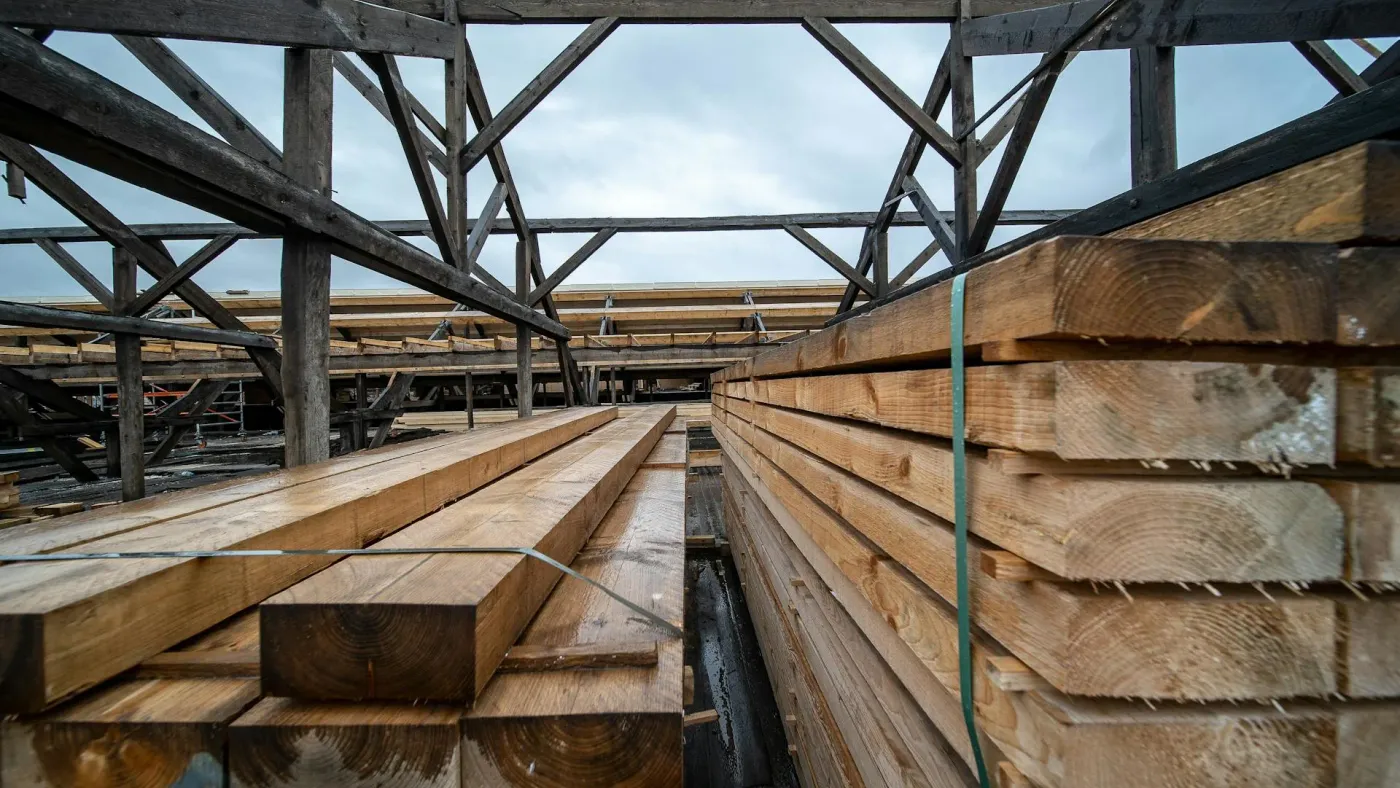
Every guide to NZ timber treatment hazard classes is written for builders. They explain where each class can be used in a house, which applications need H3.2 vs H4, and how to comply with the Building Code. That’s useful information if you’re framing a wall. If you’re running the mill that produces, treats, stocks, and dispatches that timber, you need a different lens.
This guide covers the same hazard classes, but from the perspective of the people handling them at every stage of production. What each class looks like in the yard, which preservatives produce which colour, the bin-mixing errors that trigger non-conformance, and the practical inventory implications of tracking treatment through your operation.
New Zealand timber treatment is governed by NZS 3640:2003 (Chemical Preservation of Round and Sawn Timber), which has been amended five times, most recently with Amendment 5 in December 2012. The standard defines a series of hazard classes (H-classes) that indicate the biological hazard a treated timber product is designed to withstand.
The hazard class system is shared with Australia via AS/NZS 1604, though each country has its own regulatory body overseeing compliance. In NZ, the New Zealand Timber Preservation Council (NZTPC) manages the WOODmark licensing scheme that certifies treatment plants.
Here’s what each class means from a mill operator’s standpoint.
H1.2 protects against borer and termite attack in interior framing timber that stays dry. Since April 2011 (B2/AS1 Amendment 7), H1.2 treatment has been mandatory for all radiata pine and Douglas fir framing used in enclosed building situations. This was a major shift for the industry and means the vast majority of framing timber leaving a NZ sawmill today carries an H1.2 brand.
What it looks like: Freshly treated H1.2 boron timber has a pink tint. This comes from a red marker dye that NZS 3640 requires treatment plants to add - the boron itself is colourless. The pink can range from a vivid salmon to a faint blush depending on the treatment plant’s dye loading, and it fades under UV exposure. Timber that’s been stacked outdoors or stored near windows for a few weeks will lose the pink and look gold or pale straw - essentially the natural colour of radiata pine showing through.
This causes real confusion on site. You’ll often see two packs of H1.2 framing side by side where one is distinctly pink and the other looks untreated. Both are compliant. The pink one is fresher or had a heavier dye application; the gold one has faded or came from a plant with lighter dye loading. Some mills also see a golden-brown cast from kiln brown stain - a Maillard reaction between sugars and amino acids that occurs during high-temperature kiln drying - which further masks the pink dye. None of these colour variations indicate a different formulation or a treatment problem.
The practical takeaway: the pink is a visual marker, not the treatment itself. Fading doesn’t affect treatment quality. But it does mean you can’t rely on colour to tell H1.2 from untreated.
Preservative: Boron (boric acid or disodium octaborate tetrahydrate, preservative code 11, sometimes branded as Timbor or FramePro). The treatment must achieve a minimum retention of 0.4% BAE (boric acid equivalent) with complete sapwood penetration. Boron is now the only practical H1.2 option for sawn framing in NZ. LOSP (Light Organic Solvent Preservative) was banned from sawn framing timber in April 2011 under B2/AS1 Amendment 7, though there is a narrow exception for LOSP-treated LVL (see the H3.1 section below).
Operator notes: Boron is water-soluble. This is critical for yard management. H1.2 boron-treated timber must be kept dry after treatment. If it sits in standing water or gets prolonged rain exposure before being enclosed in a building, the boron can leach out and the treatment becomes ineffective. Stack H1.2 packs under cover or on elevated bearers with good drainage.
Inventory coding tip: Your inventory system should distinguish H1.2 from untreated timber explicitly. They look similar enough that relying on visual identification in the yard is unreliable. Use the pack label and barcode, not the timber colour.
H3.1 protects against moderate decay and borer attack in timber used outside but protected from direct wetting. Think weatherboards, fascia boards under wide eaves, exterior joinery, window and door frames, and cavity battens.
This is the hazard class where you’ll encounter the widest variety of preservative types, because H3.1 is where LOSP lives.
What it looks like: Depends entirely on the preservative. LOSP-treated timber is essentially clear - the solvent carrier doesn’t discolour the wood, so it looks like untreated, natural timber. This is precisely why it’s used for joinery and weatherboards where appearance matters. Copper azole (CuAz) and ACQ produce a greenish-brown tint, similar to H3.2 but at lower retention.
Preservatives:
LOSP (Light Organic Solvent Preservative) is the dominant H3.1 treatment for exterior joinery, weatherboards, fascia, and cavity battens. LOSP uses white spirits as the carrier instead of water, which means the timber doesn’t swell during treatment - critical for pre-machined profiles that need to hold their dimensions. The modern NZ formulation is propiconazole + tebuconazole (azole fungicides, preservative code 64) combined with permethrin (insecticide, code 70), sometimes with IPBC (code 63) added for damp service conditions. The historic tin-based LOSP actives (TBTO, code 56; TBTN, code 62) have been withdrawn.
An important distinction: LOSP was banned from sawn framing timber in 2011 (B2/AS1 Amendment 7), so you will not see LOSP-treated framing on the market. However, under B2/AS1 Amendment 8, LVL treated with LOSP-borne azoles to H3.1 retention levels can satisfy H1.2 requirements - so LOSP-treated LVL beams in framing are compliant. If your mill handles LOSP-treated LVL, track it as a distinct product from boron-treated sawn H1.2.
Copper azole (CuAz) and ACQ are also approved for H3.1 and produce the familiar green-brown tint. Boron with factory-applied grey primer is another H3.1 option - the boron provides the biological protection while the sealed primer coating prevents leaching.
Operator notes: LOSP-treated timber requires careful handling. The NZTPC mandates four days of flash-off time in fillet after treatment before transport, to allow solvent vapour to dissipate. Store in well-ventilated areas, never in confined spaces. Workers handling freshly treated LOSP timber should wear organic-solvent respirators and solvent-resistant gloves.
H3.1 is the class most commonly confused with H3.2 in the yard, because the colour difference between copper-based treatments is subtle at different retention rates. The only reliable distinction is the brand stamp on individual pieces and the pack label. Train your yard team that colour is not a reliable way to distinguish H3.1 from H3.2.
H3.2 is the workhorse outdoor treatment class. It covers timber that will be exposed to the weather but not in contact with the ground: decking, fencing rails, pergola beams, retaining wall capping, exterior cladding.
What it looks like: Green. The distinctive green of CCA (copper chrome arsenate) or the slightly different green-brown of ACQ/CuAz. Most H3.2 timber from NZ treatment plants is CCA-treated and has the classic strong green colour.
Preservative: CCA is dominant for H3.2 in NZ. CuAz and ACQ are used by some plants and produce a brown-green rather than bright green finish.
Operator notes: H3.2 is your highest-volume outdoor treatment class and the one most likely to be affected by bin-mixing errors. The visual difference between H3.2 CCA (bright green) and H3.2 CuAz (brown-green) is obvious, but the visual difference between H3.1 CCA and H3.2 CCA is essentially zero to the naked eye. Segregate by pack label, not by colour.
H3.2 is also the class most often dispatched incorrectly when mills don’t have good pack-level tracking. A customer orders H3.2 for a deck and receives H3.1 that was stacked next to it. The treatment isn’t adequate for the application, and the mill wears the cost of the replacement plus the reputational damage.
H4 protects against severe decay and borer attack in timber embedded in the ground. Posts, poles, retaining wall timber in ground contact, landscaping timber.
What it looks like: Deep green, darker than H3.2. The higher CCA retention gives a more saturated green colour, though again the difference from H3.2 is not dramatic enough to rely on visually.
Preservative: CCA at higher retention than H3.2. Some plants use CuAz at elevated retention rates.
Operator notes: H4 timber has higher chemical loading, which means it’s heavier when wet and takes longer to dry after treatment. Account for this in pack weight estimates for dispatch, especially if you’re loading trucks to weight limits. A pallet of wet H4 150x50 at 6m lengths weighs noticeably more than the same timber at H3.2.
H4 is also the class where incorrect treatment can create genuine safety and liability issues. A fence post treated to H3.2 and installed in ground contact will fail prematurely, potentially within 3-5 years in wet NZ conditions. If your mill dispatches H3.2 labelled as H4, or the labels are ambiguous, you carry the liability.
H5 provides the highest level of protection for timber in severe ground contact, fresh water immersion, or critical structural applications where failure would be dangerous. Building piles, bridge timbers, marine structures (above water).
What it looks like: Very dark green, almost black when freshly treated. The extremely high CCA retention produces a visibly darker finish than H4.
Preservative: CCA at the highest retention rates. No copper azole option at this level.
Operator notes: H5 timber is a specialty product. Most NZ sawmills handle it in smaller volumes than H3.2 or H4. The key operational concern is contamination of the treatment bath if your plant is processing multiple hazard classes in the same vessel. H5 requires significantly higher preservative concentration, and the bath needs to be properly adjusted between runs.
From an inventory perspective, H5 packs should be physically segregated from H4 in the yard. The colour difference is subtle when dry, and the consequences of shipping H4 in place of H5 are severe because the end uses (building piles, bridge timbers) are structural and safety-critical.
Untreated radiata pine and Douglas fir have legitimate uses: internal linings, furniture components, packaging, pallets, and export logs. Macrocarpa heartwood is naturally durable to Class 3 (equivalent to H3 above ground) and doesn’t require treatment for many applications.
Operator notes: Untreated timber must be clearly segregated from treated stock. The biggest risk is a customer receiving untreated timber when they ordered treated. This happens most often with H1.2 boron, which looks almost identical to untreated timber once dry. Clear labelling and barcode-level tracking eliminate this risk.
A quick visual reference for yard teams. Note that colour alone is never a reliable identifier for treatment class. Always verify via the pack label or piece brand stamp.
Mixing H3.1 and H3.2 in the same row. The two classes look almost identical when treated with the same preservative. If they’re stacked adjacent without clear labels, forklift operators will pull the wrong pack at dispatch time. Physically separate them or use a colour-coded station system.
Assuming boron-treated timber is untreated. Dried H1.2 boron timber is visually indistinguishable from untreated. If your label falls off or becomes illegible, you have no way to tell which is which without a chemical test. This is why durable pack labels matter.
Stacking wet H1.2 boron outdoors. Boron leaches in water. If your H1.2 stock is sitting uncovered in the rain, the treatment is degrading. Either store under cover or ensure the timber is kiln-dried before it goes into outdoor storage.
Not tracking preservative type alongside hazard class. Two packs both branded H3.2 can look visually different if one is CCA and the other is CuAz. Customers sometimes specify a preservative type (some builders prefer CuAz for its lower toxicity), so your inventory system should track preservative type at the pack level, not just the hazard class.
Treatment class is one of the most important attributes in your inventory data model. A pack of 90x45 SG8 Radiata at 4.8m is a completely different product depending on whether it’s H1.2, H3.2, or Untreated. They serve different markets, carry different prices, and have different compliance requirements.
If your inventory system treats treatment as an afterthought (or worse, doesn’t track it at all), you will spend time at every stocktake and every dispatch manually verifying treatment classes. That’s time your team should be spending on production.
The investment in getting treatment tracking right at the pack level, from the moment the pack is created through to dispatch, pays for itself the first time you avoid shipping the wrong treatment class to a customer.
Purpose-built for NZ sawmills
Ready to replace the spreadsheet?
See how Timberflow works for your operation — from first scan to dispatch docket.
Five signs your sawmill has outgrown spreadsheet-based inventory tracking, and what a purpose-built system actually needs to handle for NZ timber operations.
Read further
How to design a barcode scanning workflow that survives a NZ timber yard. Covers symbology, tag durability, scan points, offline sync, and integration with dispatch and inventory.
Read further
A practical guide to NZ structural timber grades for sawmill operators. Covers the SG system, machine vs visual grading, the 2011 amalgamation, grade stamps, and how grading data flows into inventory.
Read further