
Why most NZ sawmills outgrow Excel for inventory management
Five signs your sawmill has outgrown spreadsheet-based inventory tracking, and what a purpose-built system actually needs to handle for NZ timber operations.
Read furtherWritten on
How to read the numbers branded onto treated timber in New Zealand. Covers every NZTPC preservative code, what WOODmark® certification means, and how to decode a brand stamp at a glance.
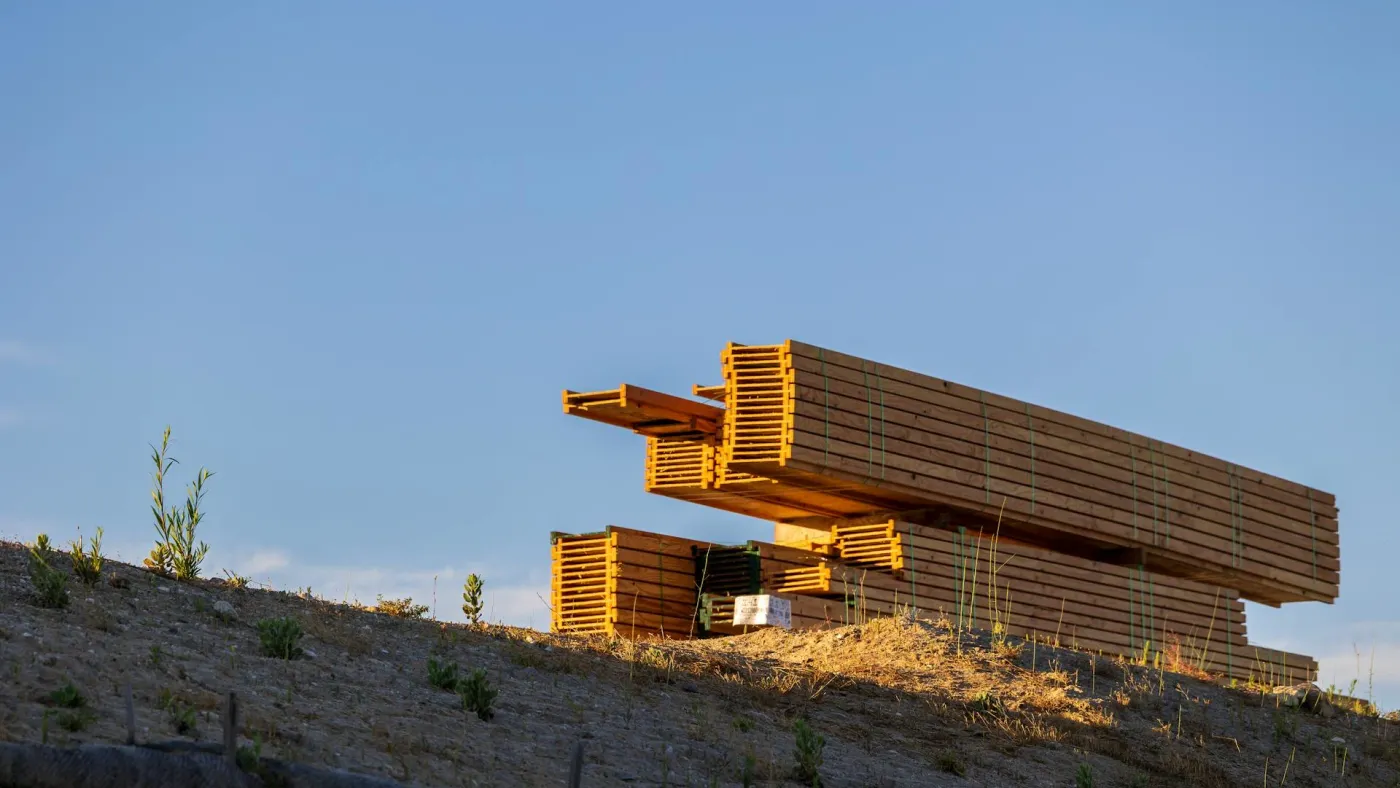
Every piece of treated timber sold in New Zealand should carry a brand stamp. Not a label that can fall off - a permanent ink stamp, burn brand, or incised mark applied directly to the wood. That brand tells you three things: which plant treated it, what chemical was used, and what hazard class it was treated to. If you can read those three pieces of information, you can verify any piece of treated timber in your yard in seconds.
This guide covers the NZTPC preservative code system, what WOODmark® certification means, and how to decode a brand stamp - practical knowledge for anyone running a sawmill, treatment plant, or timber yard in New Zealand.
Under NZS 3640:2003 §5.1.4, every compliant piece of treated timber must carry three pieces of information:
A typical brand on pink H1.2 framing reads something like: WOODmark® [plant#] 11 H1.2. On CCA-treated decking it might be: 123 02 H3.2. The WOODmark® logo is optional - only NZTPC-licensed plants can use it - but the other three elements are mandatory.
NZS 3640 specifies where and how often the brand must appear:
If your treatment plant is NZTPC-licensed, your branding equipment is part of your compliance chain. A piece of timber that leaves your yard without a legible brand stamp - or with the wrong code - is a non-conformance. At dispatch, a quick visual check of the brand stamp against the pack label is your last line of defence against shipping the wrong product.
The NZTPC publishes the authoritative list of preservative codes at nztpc.co.nz/timber-preservative-codes. Every EPA-approved timber preservative used in New Zealand is assigned a unique code number. Here’s the current set, with practical notes on what you’ll actually encounter at a working sawmill:
Code 01 - CCA Oxide (Chromated Copper Arsenate). The classic “tanalised” preservative. Water-based, produces the distinctive green colour. Used for H3.2, H4, H5, and H6. The dominant outdoor treatment in NZ. If you see bright green timber in your yard, it’s almost certainly code 01.
Code 02 - CCA Salt. Same active ingredients as code 01 but formulated as a salt rather than an oxide. Functionally equivalent for the same hazard classes. Less common than 01 but still in active use.
Code 11 - Boron (boric acid / disodium octaborate). The standard H1.2 framing treatment. Water-based, colourless (the pink tint comes from a required marker dye, not the boron itself). Also used for H1.1 interior linings and, with a factory-applied grey primer coating, for some H3.1 applications. If you’re running a framing mill, code 11 is the treatment code on the majority of your output.
Code 58 - Copper Azole (CuAz). Includes micronised copper azole (MCA), branded commercially as MicroPro®, Protim Micro, and Tanalith MCA. Water-based, produces a green-brown colour that weathers to honey-brown. Approved for H3.2, H4, and H5. Growing in market share as an alternative to CCA, particularly where builders or homeowners prefer a non-arsenic treatment.
Code 64 - Propiconazole + Tebuconazole (azole fungicides). The modern LOSP active. Combined with permethrin (code 70) in a white-spirits carrier for H3.1 exterior joinery, weatherboards, fascia, and cavity battens. Also available in a water-borne formulation. This is the code you’ll see on the vast majority of LOSP-treated timber produced today.
Code 70 - Permethrin. A synthetic pyrethroid insecticide. Almost always co-formulated with code 64 azoles in LOSP treatment. Provides the insect protection component where the azoles handle fungal decay.
Code 90 - ACQ (Alkaline Copper Quaternary). Water-based, produces a green-brown tint similar to CuAz. Approved for H3.2, H4, and H5. An arsenic-free alternative to CCA. Less common than CuAz in current NZ practice but still in active use.
Code 57 - Copper Naphthenate. An LOSP or oil-borne preservative with a distinctive greenish tint. Used for H3.2 applications and commonly available as a brush-on treatment for cut ends and field-drilled holes in CCA or CuAz-treated timber. If your yard stocks a bottle of green end-seal for treating saw cuts, it’s probably copper naphthenate.
Code 63 - IPBC (Iodopropynyl Butylcarbamate). An LOSP-borne fungicide used for H3.1 timber in damp service conditions. Sometimes added to the code 64+70 LOSP formulation for enhanced protection where moisture exposure is higher than typical H3.1 situations.
Code 56 - TBTO (Tributyl Tin Oxide). A historic LOSP active used for H1.2 and H3.1. Withdrawn from the market due to health concerns. You may encounter it on older stock or in legacy records, but no NZ treatment plant is producing TBTO-treated timber today.
Code 62 - TBTN (Tributyl Tin Naphthenate). Another historic tin-based LOSP active, withdrawn for the same reasons as TBTO.
Creosote appears in legacy NZS 3640 text but is no longer commercially available in NZ. Deemed carcinogenic and omitted from NZTPC’s current code list.
WOODmark® is the NZTPC’s licensed quality-assurance trademark. It’s not a preservative or a treatment method - it’s a mark that says “this timber was treated at a plant that meets NZTPC’s quality standards.”
Only NZTPC-licensed treatment plants can use the WOODmark® logo on their brand stamps. Licensees operate under a Timber Preservation Quality Manual aligned to ISO 9002, with internal testing supplemented by four independent audits per year. NZTPC auditors take samples for spot-tests (reagent sprays for chemical verification) and IANZ-accredited lab analysis.
If your treatment plant is WOODmark®-licensed, you already know the compliance requirements. If you’re purchasing treated timber from external treatment plants, look for the WOODmark® logo on the brand stamp. Its presence means the plant has been independently verified to produce timber that meets NZS 3640 retention and penetration standards.
Its absence doesn’t necessarily mean the treatment is non-compliant - unlicensed plants can still treat to the standard - but it does mean there’s no third-party verification. For customers who ask about treatment quality, WOODmark® is the credential that answers the question.
If your inventory system only tracks hazard class (H1.2, H3.2, etc.), you’re missing a dimension that matters. Two packs both branded H3.2 can use different preservatives - one CCA (code 01), one CuAz (code 58) - and they look visually different, weather differently, and some customers specifically request one over the other.
The preservative code should be a trackable attribute at the pack level in your system, alongside species, grade, treatment class, and dimensions. When a customer orders “H3.2 CuAz” or “H3.2 non-CCA”, your team needs to be able to filter on that in the inventory report and verify it at dispatch.
For mills that operate their own treatment plant, the preservative code is determined by what’s in your treatment bath. For mills that purchase pre-treated timber, the code is on the brand stamp and should be recorded when the pack enters your yard.
| Code | Preservative | Carrier | Common hazard classes |
|---|---|---|---|
| 01 | CCA Oxide | Water | H3.2, H4, H5, H6 |
| 02 | CCA Salt | Water | H3.2, H4, H5, H6 |
| 11 | Boron | Water | H1.1, H1.2, H3.1 (primed) |
| 57 | Copper Naphthenate | LOSP/oil | H3.2, cut-end treatment |
| 58 | Copper Azole / MCA | Water | H3.2, H4, H5 |
| 63 | IPBC | LOSP | H3.1 (damp service) |
| 64 | Azoles (propiconazole + tebuconazole) | LOSP/water | H3.1, H1.2 (water-borne) |
| 70 | Permethrin | LOSP | H3.1 (with code 64) |
| 90 | ACQ | Water | H3.2, H4, H5 |
For the full hazard class breakdown - what each class means, what it looks like in the yard, and the common errors that lead to misshipment - see the companion guide: NZ timber treatment hazard classes explained for sawmill operators.
Purpose-built for NZ sawmills
Ready to replace the spreadsheet?
See how Timberflow works for your operation — from first scan to dispatch docket.
Five signs your sawmill has outgrown spreadsheet-based inventory tracking, and what a purpose-built system actually needs to handle for NZ timber operations.
Read further
How to design a barcode scanning workflow that survives a NZ timber yard. Covers symbology, tag durability, scan points, offline sync, and integration with dispatch and inventory.
Read further
A practical guide to NZ structural timber grades for sawmill operators. Covers the SG system, machine vs visual grading, the 2011 amalgamation, grade stamps, and how grading data flows into inventory.
Read further